
WhatsApp Status Ads Are Delivering Nearly 50% of Our Campaign Clicks. Here’s What We Learned
In some of the digital advertising campaigns we manage at BLU Flamingo, WhatsApp is now accounting for nearly half of all campaign clicks.
That’s a significant share of traffic from a relatively new advertising placement. And it’s something we’ve been paying close attention to as we manage campaigns across African markets.
For years, most advertisers have concentrated their Meta advertising budgets on Facebook and Instagram. WhatsApp, meanwhile, has largely been treated as a customer service channel or a place to continue conversations started elsewhere.
The BLU Newsletter — FREE
Get What’s Working in Marketing Right Now
WhatsApp funnels, AI search, the ad platforms outperforming everyone. Get the useful content before it’s obvious — from an agency in the middle of it across 5 countries.
Join thousands of marketers. Unsubscribe anytime.
That’s changing.
With advertising now available in WhatsApp Status, brands have another opportunity to reach potential customers inside an app they already use every day.
What WhatsApp actually launched
Meta announced advertising on WhatsApp in June 2025, and WhatsApp confirmed the global rollout in February 2026. In Uganda, and other african countries, this has been rolled out late October for public use. There are three parts to it, and all of them live in the Updates tab, where people watch Status and follow Channels.
Personal chats, calls and groups stay ad-free.
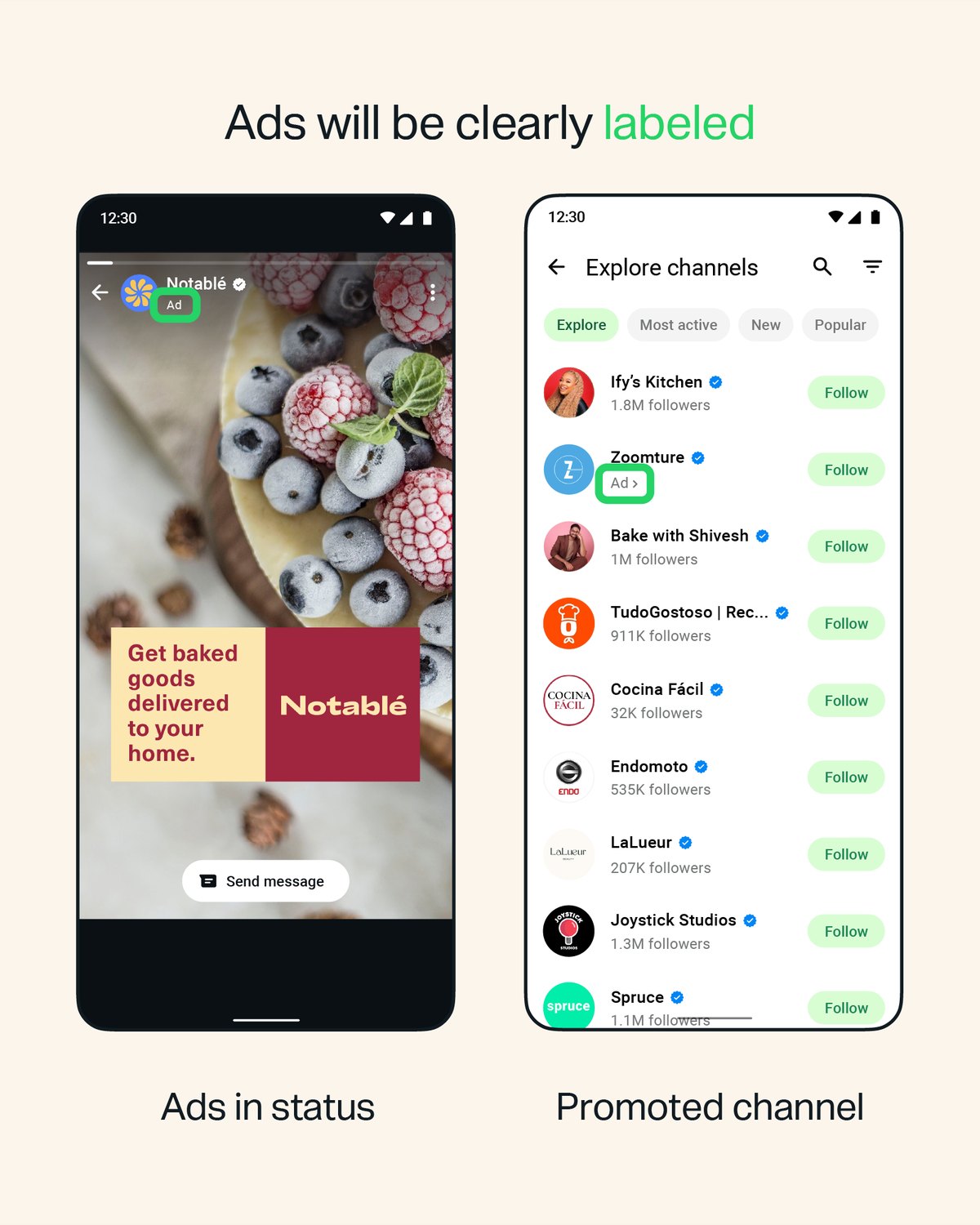
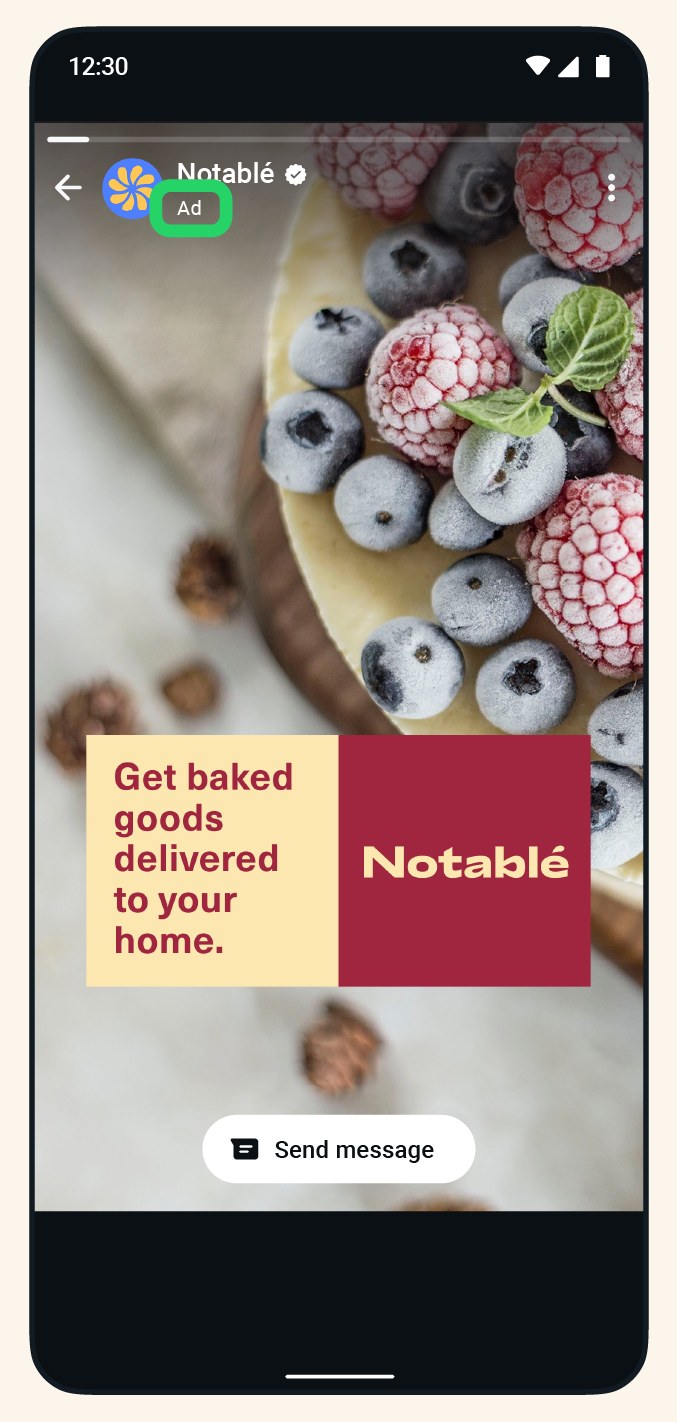
- Ads in Status. Full-screen image or video ads that appear between the Status updates people are tapping through, much like Stories ads sit between friends’ Stories on Instagram. They’re labelled “Ad” and carry a button, usually Send message, that opens a WhatsApp chat with the business.
- Promoted Channels. Businesses and creators can pay to have their Channel suggested in the Channels directory, again clearly labelled as an ad.
- Channel subscriptions. Channel admins can charge followers a monthly fee for exclusive updates.
For anyone buying media, the first one is the headline. According to Meta, around 1.5 billion people use the Updates tab every day. That’s a huge amount of daily attention, inside the app that, across much of Africa, is already where customers talk to businesses.
One practical note: WhatsApp’s own help centre says ads in Status and Channels are rolling out gradually, so availability still varies by country and by ad account. If you open Ads Manager and can’t find the WhatsApp Status placement, that’s usually why. It doesn’t mean you’re doing something wrong.
How targeting works, and why it puts more weight on your creative
WhatsApp has been careful here, and it changes how you should plan. According to WhatsApp, ads are not chosen using your personal messages, calls, Status, phone contacts or the groups you’re in. Instead, it works from a much narrower set of signals:
- Basic account information, such as country code and age
- Device language
- General location, at city or country level, never precise location
- Activity in the Updates tab: the Channels you follow, what you engage with there, and the ads you’ve tapped
If someone has chosen to add WhatsApp to their Meta Account (what used to be called Accounts Center), their wider Meta ad preferences can be used too. Everyone else is reached on those broader signals.
In practice, this means you can’t rely on the narrow interest targeting you might use on Facebook. The creative has to do more of the targeting. An ad that makes it clear in the first second who it’s for, and what happens when you tap, will find its people. A generic brand ad gets swiped past, or worse, picks up clicks from people who were never going to buy.
Why WhatsApp is pulling so many clicks
When a placement suddenly delivers nearly half of a campaign’s clicks, the first job is to be sceptical. Is it real interest, or accidental taps? Here’s what we think is driving it, based on what we’re seeing in the data.
The audience was already there
In our markets, WhatsApp isn’t just a messaging app. It’s where customers ask for prices, where shops take orders, and where people check Status updates from friends, family and the business down the road. Watching Status was a daily habit long before there were ads in it. Meta has simply put inventory where the attention already was.
The inventory is new, and the competition is thin
Most advertisers in the region are still running the same Facebook and Instagram setups they built two years ago. Fewer brands bidding for the same attention generally means cheaper reach and cheaper clicks. That window won’t stay open forever. As more advertisers move in, costs will rise, just as they did on Instagram Stories and then Reels.
The next step is a chat, not a website
This is the big one. The button on a Status ad opens a WhatsApp conversation inside the app the person is already using. No page to load, no form to fill in. For audiences on patchy mobile data or small data bundles, that removes a lot of friction. Tapping Send message feels like a small, safe step. Visiting a website you’ve never heard of doesn’t.
Some of those clicks will be accidental
We’d be lying if we said every tap was intentional. Status is a fast, thumb-driven format, and some people will tap through by mistake. That’s exactly why we never judge a WhatsApp placement on clicks alone. More on that below.
A WhatsApp click is the start of a conversation, not the end of a funnel
This is where most businesses will lose the money they put into WhatsApp ads. On a normal campaign, a click lands on a page that’s been built, tested and improved over time. On WhatsApp, the click lands in your inbox. Whoever answers that chat is now your landing page.
If nobody replies for four hours, the lead is gone. If the reply is “Hello, how can I help you?” after the customer has already said exactly what they want, it’s probably gone. If the person answering doesn’t know the price or the delivery time, it’s gone.
So before we switch on a WhatsApp campaign for a client, we look at the conversation side as closely as the media side:
- Who answers, and how fast? Ads run at night and over weekends. Someone, or something, needs to respond in minutes, not hours.
- What’s the first message? A pre-filled opening message ties the chat back to the ad, so your team knows exactly which offer the person tapped on.
- What happens next? Quick replies for price, delivery and location. A catalogue they can browse. A payment link that keeps the sale inside the chat.
- How do you follow up? Someone who started a chat but didn’t buy is a warm lead. With their permission, they should hear from you again.
We’ve written a full guide on this side of the work: how to build a WhatsApp marketing strategy that actually converts. If you’re about to start paying for WhatsApp traffic, read it first. Ads multiply whatever is already happening in your chats, good or bad.
How we set up WhatsApp ad campaigns
Every account is different, and Meta changes the rules often enough that we re-check them at the start of every campaign. But this is the framework we work from.
1. Start from the business goal, not the placement
WhatsApp Status isn’t a separate ad platform. It’s a placement inside Meta Ads Manager, alongside Facebook, Instagram and the rest. You choose the campaign objective first, based on what you actually need: conversations, leads, traffic or sales. Then you decide whether WhatsApp belongs in the mix. For businesses that sell through conversation, a messaging objective that sends people straight into a WhatsApp chat is usually the natural fit.
2. Separate WhatsApp so you can read it properly
Leave WhatsApp Status inside a broad automatic placement setup and Meta’s algorithm will push budget wherever results are cheapest, which can mean cheap clicks rather than good customers. When we test, we either break WhatsApp out into its own ad set or, at the very least, break reporting down by placement, so we can see what it’s really delivering compared with Facebook and Instagram.
The placement also has a few limits worth knowing. Meta’s developer documentation says Status doesn’t currently support A/B tests, dynamic creative or reach and frequency buying, and when you choose placements manually, Instagram Stories has to be selected alongside it.
3. Build vertical creative for Status, not resized Facebook posts
Status is a full-screen, vertical format. A square post with a blurred background looks like an ad and gets swiped. What works for us: 9:16 creative, the offer visible in the first second, local language where it suits the audience, real people and real products rather than polished stock photos, and an obvious reason to tap Send message right now.
4. Measure conversations, then customers
Clicks are where our reporting starts, not where it stops. For WhatsApp campaigns, the numbers we hold ourselves to are cost per conversation started, the share of those conversations that become qualified leads and, wherever the client’s systems allow it, cost per sale. That means tagging chats by campaign and getting the sales team to record outcomes. It’s unglamorous work. It’s also the only way to know whether nearly half your clicks are worth nearly half your budget.
5. Watch frequency
Status feels personal. People will put up with an ad between their cousin’s wedding photos once or twice. Five times in a day and you’ve turned a warm audience into an annoyed one, and WhatsApp makes it easy for users to hide ads from a specific advertiser. We cap frequency and refresh creative more often than we would on Facebook.
Mistakes we’re already seeing
- Celebrating the click-through rate. A high CTR on Status means very little if the chats go nowhere. Report on conversations and sales.
- Sending ad traffic to a personal number. Use a proper WhatsApp Business account connected to your Meta business assets, with a complete, verified-looking profile. People check before they buy, especially in markets where scams are common.
- Nobody on the inbox. Paying for conversations your team can’t handle is the fastest way to burn a budget.
- Treating WhatsApp as a standalone channel. It works best alongside Facebook, Instagram and search, with each placement doing the job it’s best at. Our performance marketing work plans them together for exactly that reason.
- Waiting until everyone else is in. Early inventory is cheaper inventory. The brands testing now will have the data, and the creative that works, by the time prices go up.
Is WhatsApp advertising right for your business?
WhatsApp ads make the most sense when your customers already like to talk before they buy: retail and e-commerce, property, automotive, education, financial services, healthcare, hospitality, and B2B services where a conversation is part of the sale. If your sales happen entirely at a website checkout, it can still work, but the case is weaker and we’d test it more carefully.
It’s a poorer fit for businesses that can’t staff a chat inbox, or that need very narrow audience targeting that WhatsApp’s privacy-first approach simply doesn’t allow.
Let us run your WhatsApp campaigns
We’ve already done the testing across our markets: the placement setups, the creative that gets tapped instead of swiped, the chat flows that turn conversations into sales, and the reporting that tells you what each WhatsApp lead really costs. In some of our campaigns, WhatsApp is now close to half of all the clicks we buy.
If you want WhatsApp to become a real sales channel for your business, not just another line in a report, our media buying team can plan, launch and manage the whole thing, from the ad to the chat to the sale. Book a call with us and tell us what you sell. We’ll give you a straight answer on whether WhatsApp ads are worth it for you, and what a sensible first test looks like.
Planning campaigns in Uganda or Rwanda?
We plan and run marketing for brands in both markets, including Centenary Bank and KFC Uganda in Kampala, and Airtel Rwanda and RwandAir in Kigali.
- Social media marketing in Uganda
- Social media marketing in Rwanda
- Digital marketing in Uganda
- Digital marketing in Rwanda
Choosing a partner? How to choose a marketing agency in Uganda · How to choose a marketing agency in Rwanda